Pest Animals
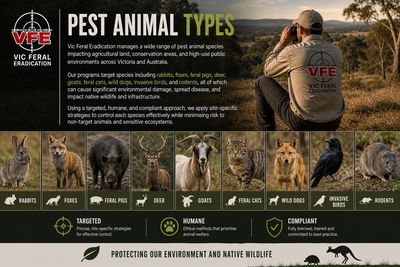
Vic Feral Eradication manages a wide range of pest animal species impacting agricultural land, conservation areas, and high-use public environments across Victoria and Australia. Our programs target species including rabbits, foxes, feral pigs, deer, goats, feral cats, wild dogs, invasive birds, and rodents, all of which can cause significant environmental damage, spread disease, and impact native wildlife and infrastructure.
Using a targeted, humane, and compliant approach, we apply site-specific strategies to control each species effectively while minimising risk to non-target animals and sensitive ecosystems.
Red Fox - Vulpes vulpes

Foxes are widespread across Victoria and are one of the most significant threats to native wildlife, with predation recognised as a key driver in the decline of many small mammals, ground-nesting birds, and reptiles. Their impact extends beyond remote areas, with peri-urban environments such as golf courses, reserves, and open green spaces often acting as important refuges for native species that are highly vulnerable to fox predation.
Foxes are highly adaptable and efficient hunters, capable of operating across a wide range of habitats. This allows them to place continuous pressure on native fauna, disrupt breeding success, and contribute to long-term population declines, particularly in already stressed or fragmented ecosystems.
Without effective management, sustained fox activity can reduce biodiversity and limit the recovery of native ecosystems. Targeted, coordinated pest control plays a critical role in reducing predation pressure, protecting vulnerable species, and supporting ecological balance.
Through integrated, site-specific control programs, long-term improvements can be achieved, helping to restore habitats, strengthen biodiversity, and maintain healthier landscapes for both native wildlife and the broader environment.
European Rabbit - Oryctolagus cuniculus
Wild rabbits have caused extensive environmental damage across Australia for more than a century and remain a major pressure on native ecosystems. Through intensive grazing and burrowing, rabbits remove ground cover, strip native vegetation, and prevent natural regeneration of grasses, shrubs, and young trees.
This loss of vegetation exposes soils to erosion, reduces moisture retention, and degrades habitats that native wildlife depend on for food and shelter. Ground-dwelling species, in particular, are heavily impacted as protective cover is lost, increasing vulnerability to predation and environmental stress.
Rabbit warrens further destabilise soil structure, contributing to land degradation across farmland, waterways, and peri-urban landscapes. Over time, this can lead to simplified ecosystems with reduced biodiversity and lower resilience to drought and disturbance.
Effective, targeted pest management is essential to reduce these impacts. Through integrated, site-specific control programs, it is possible to restore vegetation, stabilise soils, and support the recovery of native ecosystems, helping protect biodiversity and improve long-term landscape health across both agricultural and conservation environments.
Feral Pigeon - Columba livia
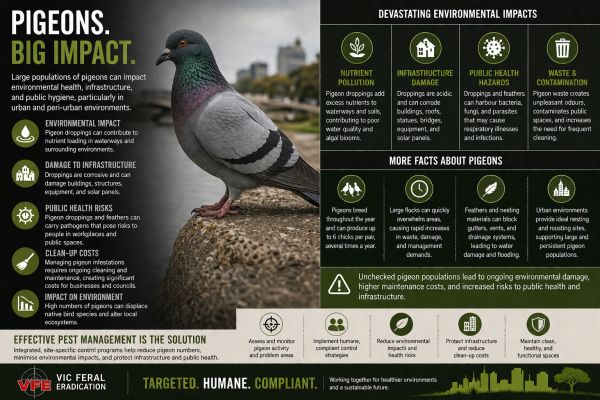
Large populations of pigeons can impact environmental health, infrastructure, and public hygiene, particularly in urban and peri-urban environments. Accumulated droppings can contribute to nutrient loading, damage buildings and equipment, and create conditions that support the spread of disease in workplaces and public spaces. In high densities, pigeons can also displace native bird species and alter local ecosystems.
These impacts are often compounded by other invasive species such as foxes, rabbits, and feral pigs, which place additional pressure on native vegetation, soil stability, and wildlife populations.
Effective, coordinated pest management is essential to reduce contamination risks, protect infrastructure, and support healthier environments. Through targeted, site-specific control programs, it is possible to improve environmental outcomes, protect native wildlife, and maintain safe, functional spaces for both people and biodiversity.
Feral Cat - Felis catus
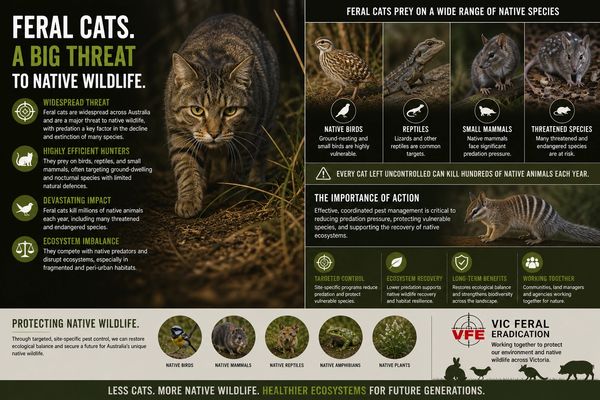
Feral cats are widespread across Australia and are a major threat to native wildlife, with predation recognised as a key factor in the decline and extinction of many species. As highly efficient, adaptable hunters, they prey on birds, reptiles, and small mammals, often targeting ground-dwelling and nocturnal species that have limited natural defences. Many threatened and endangered native animals are particularly vulnerable to ongoing predation pressure.
In addition to direct impacts, feral cats compete with native predators and contribute to broader ecosystem imbalance, especially in fragmented habitats and peri-urban environments.
Effective, coordinated pest management is critical to reducing predation pressure, protecting vulnerable species, and supporting the recovery of native ecosystems. Through targeted, site-specific control programs, long-term improvements can be achieved, helping restore ecological balance and strengthen biodiversity across Victoria and Australia.
Feral Pig - Sus scrofa
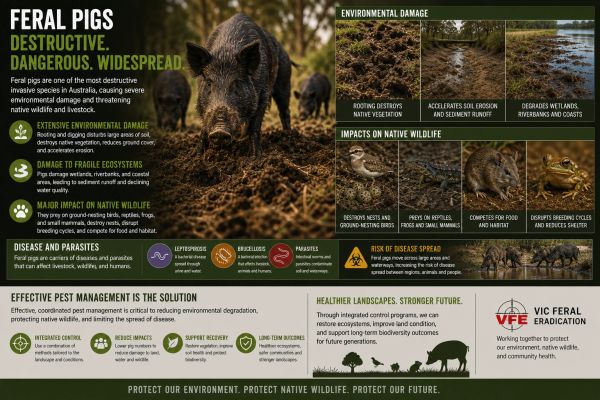
Feral pigs are one of the most destructive invasive species in Australia, causing significant environmental damage through their feeding and movement patterns. By rooting and digging, pigs disturb large areas of soil, destroying native vegetation, reducing ground cover, and accelerating erosion. This disturbance can damage fragile ecosystems, including wetlands, riverbanks, and coastal areas, leading to sediment runoff and declining water quality.
Feral pigs also have a major impact on native wildlife. They prey on ground-nesting birds, reptiles, frogs, and small mammals, and compete with native species for food and habitat. Their activity can destroy nests, disrupt breeding cycles, and reduce the availability of shelter and food sources for native animals.
In addition to environmental damage, feral pigs are known carriers of a range of diseases and parasites that can affect livestock, wildlife, and in some cases humans. These include leptospirosis, brucellosis, and parasites that can contaminate soil and waterways. Their movement across landscapes increases the risk of disease spread between regions and species.
Effective, coordinated pest management is critical to reducing environmental degradation, protecting native wildlife, and limiting the spread of disease. Through integrated control programs, impacts can be reduced, helping restore ecosystems, improve land condition, and support long-term biodiversity outcomes.
Feral Deer - Multiple species
Feral deer are an increasing environmental concern across Victoria and Australia, with expanding populations placing growing pressure on native ecosystems. Through browsing, grazing, and antler rubbing, deer can significantly alter vegetation structure, stripping understory plants, damaging young trees, and preventing natural regeneration of forests and native habitats.
This loss of vegetation reduces food and shelter for native wildlife, particularly small mammals, birds, and insects that rely on dense ground cover. Over time, deer activity can lead to simplified ecosystems with lower biodiversity and reduced resilience.
Deer also contribute to soil degradation and erosion, especially along waterways and steep terrain. Their movement and trampling disturb soil structure, increase sediment runoff into creeks and rivers, and impact water quality in sensitive environments such as wetlands and riparian zones.
In addition to environmental impacts, deer can spread weeds and pathogens through their movement across landscapes, further degrading habitat quality. They also compete with native herbivores for food resources, adding pressure to already stressed ecosystems.
Effective, targeted management is essential to reduce these impacts, protect native vegetation, and support the recovery of healthy, balanced ecosystems.
Wild Dog - Canis lupus familiaris
Wild dogs are widespread across Australia and play a significant role in shaping ecosystems, particularly where populations are unmanaged or out of balance. As apex predators, they can place pressure on native wildlife through predation and competition, especially impacting medium-sized mammals, ground-dwelling species, and already vulnerable populations in fragmented or peri-urban environments.
In some areas, elevated wild dog activity can disrupt natural ecological balance, alter species distribution, and contribute to declines in local biodiversity. Their movement across landscapes can also disturb habitats and increase stress on native fauna, particularly where food sources are limited.
Effective, targeted management is essential to reduce these impacts while maintaining ecological balance. Through coordinated, site-specific control programs, it is possible to protect native wildlife, support ecosystem recovery, and promote healthier, more resilient landscapes across Victoria and Australia.
Rodents (Rats) - Rattus rattus
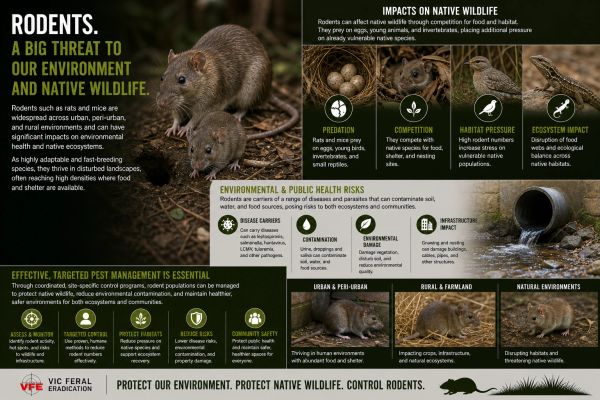
Rodents such as rats and mice are widespread across urban, peri-urban, and rural environments and can have significant impacts on environmental health and native ecosystems. As highly adaptable and fast-breeding species, they thrive in disturbed landscapes, often reaching high densities where food and shelter are available.
Rodents can affect native wildlife through competition for food and habitat, particularly impacting small mammals, birds, and reptiles. They are known to prey on eggs, young animals, and invertebrates, placing additional pressure on already vulnerable native species.
From an environmental and public health perspective, rodents are also carriers of a range of diseases and parasites, including leptospirosis, salmonella, and other pathogens that can contaminate soil, water, and food sources. Their presence in high numbers can degrade environmental quality, damage vegetation, and impact infrastructure through gnawing and nesting behaviour.
Effective, targeted pest management is essential to reduce these risks. Through coordinated, site-specific control programs, rodent populations can be managed to protect native wildlife, reduce environmental contamination, and maintain healthier, safer environments for both ecosystems and communities.
Feral Goat - Capra hircus
Myna bird - Acridotheres tristis
Myna bird - Acridotheres tristis
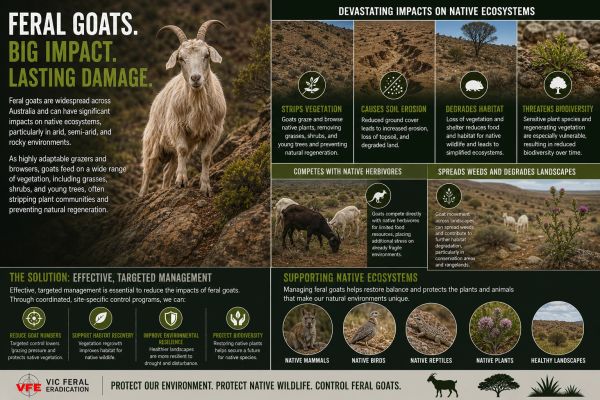
Feral goats are widespread across parts of Australia and can have significant impacts on native ecosystems, particularly in arid, semi-arid, and rocky environments. As highly adaptable grazers and browsers, goats feed on a wide range of vegetation, including grasses, shrubs, and young trees, often stripping plant communities and preventing natural regeneration.
This sustained grazing pressure reduces ground cover, increases soil erosion, and degrades habitats that native wildlife rely on for food and shelter. Sensitive plant species and regenerating vegetation are especially vulnerable, leading to simplified ecosystems and reduced biodiversity over time.
Feral goats also compete directly with native herbivores for limited food resources, placing additional stress on already fragile environments. Their movement across landscapes can spread weeds and contribute to further habitat degradation, particularly in conservation areas and rangelands.
Effective, targeted management is essential to reduce these impacts. Through coordinated, site-specific control programs, feral goat populations can be managed to protect native vegetation, support habitat recovery, and improve long-term environmental resilience.
Myna bird - Acridotheres tristis
Myna bird - Acridotheres tristis
Myna bird - Acridotheres tristis
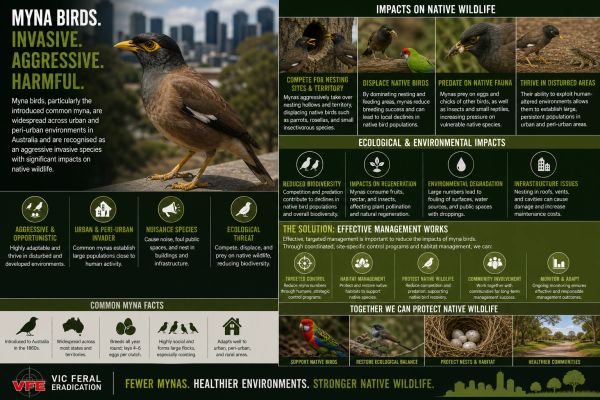
Myna birds, particularly the introduced common myna, are widespread across urban and peri-urban environments in Australia and are recognised as an aggressive invasive species with significant impacts on native wildlife.
Highly adaptable and opportunistic, myna birds compete with native species for nesting hollows, food, and territory. They are known to displace native birds such as parrots, rosellas, and small insectivorous species by aggressively taking over nesting sites and dominating feeding areas. This competition reduces breeding success and can lead to local declines in native bird populations.
Myna birds also prey on eggs and chicks of other birds, as well as insects and small reptiles, further increasing pressure on already vulnerable native fauna. Their ability to thrive in disturbed and developed environments allows them to establish large, persistent populations close to human activity.
In addition to ecological impacts, myna birds can create nuisance issues through noise, fouling of public spaces, and nesting in buildings and infrastructure.
Effective, targeted management is important to reduce these impacts. Through coordinated, site-specific control programs and habitat management, myna populations can be reduced, helping protect native wildlife, restore ecological balance, and support healthier urban and natural environments.